Lactic acid bacteria
Support fermentation and biological transformation.
 RESEARCH & INSIGHTS
A scientific and commercial assessment of EM technology for transforming organic waste into stabilized, nutrient-rich soil amendments.
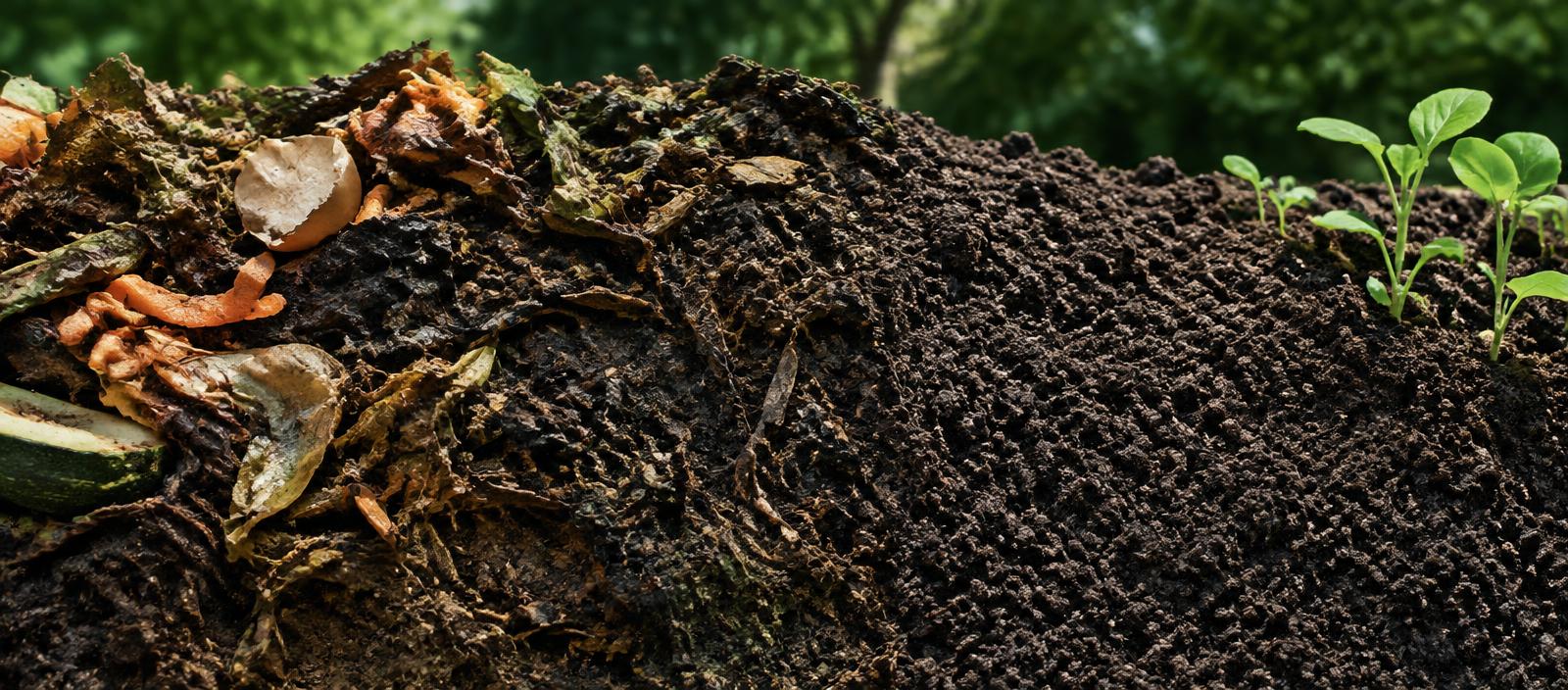
The publicly available evidence supports a cautiously positive conclusion: EM may improve specific aspects of organic-waste transformation—particularly odor control, humification, nutrient retention, and compost maturation.
However, evidence does not support the simplistic claim that adding EM makes every composting operation faster or dramatically better.
“EM is most valuable as a biological process-management tool—not as a substitute for proper composting engineering.”
EM formulations generally contain a consortium of microorganisms that interact with organic matter and the existing microbial community.
Support fermentation and biological transformation.
Contribute to fermentation and organic-matter transformation.
Associated with metabolic and ecological interactions.
Fermentative and decomposer-associated organisms support broader transformation.
Organic waste is fermented with EM inoculant, often with a carbohydrate substrate.
EM is integrated into a controlled composting process—not added in place of one.
Potential feedstocks include food and green waste, crop residues, rice straw, manure, household organics, industrial residues, and sewage sludge. Suitability and safety require individual assessment.
Separate recurring observations from context-dependent results—and both from unsupported claims.
May reduce undesirable putrefaction, improve worker conditions, and support community acceptance. Assess neighbor complaints, zoning considerations, and permitting implications.
May support organic-matter transformation and mature-product quality. Humification is the formation and transformation of stable humic substances—not simply faster decomposition.
May influence nitrogen losses and nutrient characteristics in some feedstocks. Concentration changes alone do not prove that more nutrient mass was retained.
A closer look at the findings—and the limitations behind them.
Early temperatures were slightly higher, with suppressed foul odors, enhanced humification, greater fat reduction, and slightly higher final nitrogen.
Operational interpretation: Odor management may be one of the most commercially valuable applications for food-waste operations.
EM-treated compost reportedly showed significantly higher nitrogen, phosphorus, and potassium.
Operational interpretation: Measure nutrient mass balances, not concentrations alone, before attributing nutrient improvements to treatment.
Over approximately 90 days, reported EM-treated characteristics included pH 7.28, humus 26.5%, total nitrogen 1.33%, increased available phosphorus and potassium, and a C/N ratio near 20.
Operational interpretation: Potential improvements in finished quality and process consistency warrant replicated commercial testing.
Reported improvements included nitrogen, humification, germination index, and a lower final C/N ratio, alongside earlier and longer thermophilic conditions.
Operational interpretation: Validate the full quality profile under the actual operating conditions of the proposed facility.
Summarized household-waste research supplied in the brief; primary citations were not provided. Phosphorus and potassium are normalized to control = 100. Not a BROTERRA pilot result.
| Quality parameter | EM treatment | Control |
|---|---|---|
| Total nitrogen | 2.1% | 1.7% |
| Phosphorus | 115 index | 100 index |
| Potassium | 118 index | 100 index |
| Final C/N ratio | 18:1 | 22:1 |
| Humification | 35% | 20% |
| Germination index | 85% | 70% |
A two-stage approach connects source-level fermentation with professionally managed aerobic maturation.
Restaurants · Hotels · Schools · Universities · Commercial kitchens · Multifamily properties
Controlled biological processing and quality testing to produce a stabilized, mature soil amendment.
Controlled designs, transparent methods, replication, and statistical analysis support an assessment of treatment effects.
Industrial operations have reported faster processing, improved microbial diversity, odor management, pathogen-management outcomes, sludge diversion, and biologically active soil conditioners.
Some research found no significant differences among several application rates. The commercial question is: What is the lowest effective EM application rate?
Chemical and contaminant behavior may change during composting. Environmental safety remains a separate testing and compliance responsibility.
Controlled vegetable-based commercial organic waste may offer greater consistency, lower contamination risk, easier quality control, and more predictable biological processing. Source control does not replace laboratory testing.
BROTERRA combines controlled feedstock management, Effective Microorganism technology, and scientifically managed composting to accelerate the transformation of organic waste into a stabilized, biologically active, nutrient-rich soil amendment.
Four questions. A matched control. Independently measured results.
Same feedstock, moisture target, aeration strategy, pile dimensions, turning schedule, and monitoring protocol.
Conventional composting conditions plus a standardized, documented EM treatment using the same vegetable-based feedstock.
Characterize feedstock and treatment; establish replicated groups.
Track temperature, oxygen, moisture, odors, and labor.
Track stability, nutrients, leachate, and maturity.
Laboratory testing, statistical analysis, and economic review.
Quantify potential revenue and cost advantages across the full value chain.
EM is not a standalone solution. Its strongest potential benefits—odor management, humification, nutrient retention, and maturation under favorable conditions—are most valuable within a properly engineered waste-processing system.
“The opportunity is not simply to demonstrate that EM works.”
The opportunity is to generate independently measured U.S. operational data showing whether EM creates measurable improvements in processing time, odor management, nutrient retention, compost maturity, and economics.
If a controlled pilot shows statistically meaningful improvements against conventional composting using the same vegetable-waste feedstock, BROTERRA would gain proprietary operational evidence supporting a scalable waste-management model.
Scientific & editorial disclosure. This report is based on the supplied specification and summarized research observations. Primary citations and integrated study datasets were not provided. Figures are illustrative summaries, not verified BROTERRA results. Associations do not alone establish causation. Performance, safety, and commercial claims require independent, site-specific validation.
Founder & Executive Director
T.I.A. Regenerative Solutions
Info@regenerativesolutions.com